
From Idea to Reality in a Clack


As global air travel continues to expand, airports face increasing pressure to minimize their environmental footprint while maintaining operational excellence. Eco-friendly metal roofing systems for airports have emerged as a transformative solution, combining durability, sustainability, and technological innovation to address the unique challenges of aviation infrastructure. These advanced roofing systems not only protect vast terminal buildings and hangars but also contribute actively to reducing carbon emissions and energy consumption.
The aviation industry's commitment to sustainability has driven significant innovations in airport design and construction. Among these advancements, sustainable airport roofs represent one of the most impactful areas for environmental improvement, particularly given the massive scale of airport facilities and their 24/7 operational demands.
Traditional airport roofing systems faced numerous challenges that modern solutions now address comprehensively. High energy consumption for climate control has long been a concern, as has the limited lifespan requiring frequent replacements. Poor integration with renewable energy systems and significant maintenance requirements added to the operational burden, while the heavy environmental impact during manufacturing and disposal raised sustainability concerns.
Modern eco-friendly metal roofing systems have revolutionized this landscape through innovative materials, design principles, and integrated technologies that transform airport roofs from passive structures into active environmental assets. These contemporary solutions not only overcome traditional limitations but actively contribute to airport sustainability goals.
Contemporary airport roofing solutions represent a significant advancement in sustainable construction. These systems utilize recycled aluminum and steel with up to 95% recycled content, dramatically reducing the demand for virgin materials. Cool coating technologies play a crucial role by reflecting solar radiation to reduce heat absorption, while low-emission manufacturing processes minimize the carbon footprint during production. Perhaps most importantly, these materials are fully recyclable at end-of-life, supporting circular economy principles and ensuring that today's roofing doesn't become tomorrow's waste.
Advanced metal roofing systems achieve remarkable energy efficiency through multiple integrated technologies. High-performance insulation dramatically reduces thermal transfer between exterior and interior spaces, while reflective surfaces can lower cooling demands by up to 40%. Natural ventilation design minimizes the need for mechanical climate control, and thermal mass optimization helps stabilize interior temperatures throughout the day. These features work synergistically to create airport environments that require significantly less energy to maintain comfortable conditions.
Modern designs incorporate lightweight construction that reduces structural support requirements, allowing for more flexible architectural designs and potentially lower construction costs. Modular components facilitate efficient installation and maintenance, reducing airport disruption during construction or repairs. These systems feature weather-resistant engineering capable of withstanding extreme conditions while providing acoustic optimization to manage aircraft noise pollution effectively.
The integration of photovoltaic airport roofing represents a paradigm shift in sustainable aviation infrastructure. These systems transform expansive roof areas into renewable energy generators, significantly offsetting airport electricity consumption and creating new revenue streams through energy production.
Large-scale airports can generate 10-20 MW from roof-mounted systems, taking advantage of terminal buildings' optimal south-facing orientations and hangars' unobstructed solar exposure. This substantial energy generation capacity provides airports with reduced reliance on traditional power sources, with peak generation often aligning perfectly with high-demand periods. The integration of battery storage systems enables 24/7 operational support, ensuring consistent power availability even during nighttime operations.
Financial returns from these systems are compelling, with typical payback periods ranging from 15-25 years. Government incentives and carbon credits further enhance the economic case, while protection against energy price volatility provides long-term financial stability.
Successful photovoltaic integration demands careful attention to several technical factors. Structural analysis ensures adequate load-bearing capacity for solar panels and associated equipment. Electrical infrastructure must include high-capacity inverters and distribution systems capable of handling significant power flows. Maintenance access requires safe pathways for cleaning and repairs, while aviation safety compliance demands careful attention to glare reduction and height restrictions to avoid interference with flight operations.
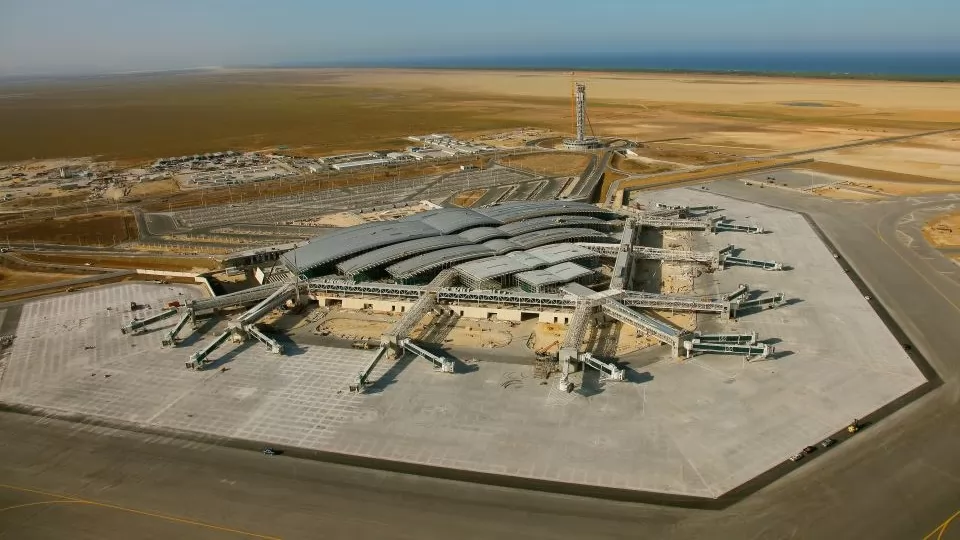
Riverclack has established itself as a pioneering force in eco-friendly metal roofing solutions, particularly for large-scale infrastructure projects. Their proprietary systems combine advanced coating technologies that maximize solar reflectance with integrated photovoltaic solutions that enable seamless solar panel incorporation. Smart monitoring systems provide real-time performance tracking, while their modular design philosophy facilitates rapid deployment across diverse project requirements.
The company's airport roofing systems have demonstrated remarkable results across multiple installations. These include a 35% reduction in cooling energy consumption, a 20-year minimum service life with minimal maintenance requirements, 95% recyclability at end-of-life, and compatibility with various photovoltaic technologies. These achievements position Riverclack as a leader in the transformation of airport infrastructure toward sustainability.
The environmental benefits of modern airport roofing systems extend far beyond energy efficiency, encompassing multiple aspects of sustainability.
Manufacturing processes for these systems produce up to 75% lower emissions than traditional materials. The lightweight design reduces transportation impact, while operational efficiency provides continuous carbon savings. Complete recyclability at end-of-life prevents landfill waste, ensuring that the environmental benefits persist throughout the product lifecycle.
Reflective surfaces significantly reduce ambient temperatures around airport facilities, decreasing air conditioning demands in surrounding areas. This effect improves local air quality through reduced energy consumption and contributes to more comfortable urban environments near airports.
Integrated drainage systems prevent runway flooding while enabling rainwater collection for non-potable uses. These systems reduce stormwater runoff through controlled release, contributing to better watershed management and reducing the burden on municipal water treatment facilities.
The financial case for eco-friendly metal roofing systems encompasses both immediate and long-term benefits. While initial investment may be higher than traditional options, government incentives and competitive bidding help offset these costs. Economies of scale for large airport projects further improve the financial equation.
Operational savings accumulate through reduced energy bills, lower maintenance costs, and revenue generation from solar energy production. Long-term value manifests in extended service life, protection against energy price increases, and enhanced property values, making these systems attractive investments for airport operators.
The evolution of sustainable airport roofing continues with emerging technologies that promise even greater benefits. Smart roofing systems incorporate IoT sensors for real-time performance monitoring, predictive maintenance algorithms, automated cleaning systems for solar panels, and dynamic thermal management capabilities.
Advanced materials under development include graphene-enhanced coatings for superior performance, self-healing polymers that reduce maintenance needs, transparent photovoltaic integration, and bio-based composite materials that further reduce environmental impact.
Integration technologies continue to evolve, with building-integrated photovoltaics (BIPV) becoming more sophisticated, vertical axis wind turbines providing additional renewable energy at roof edges, green roof sections supporting biodiversity, and atmospheric water generation systems adding new functionality to airport roofs.
Successful implementation of eco-friendly metal roofing systems requires careful attention throughout the project lifecycle. The planning phase demands comprehensive structural assessments, climate-specific design optimization, thorough stakeholder engagement and approvals, and carefully phased installation scheduling to minimize operational disruption.
During installation, teams must focus on minimizing operational disruptions while maintaining quality control at each stage. Safety protocols specific to airport environments are essential, as is thorough documentation for warranty compliance. Ongoing maintenance involves regular inspection schedules, established cleaning protocols for optimal performance, prompt repair of any damage, and continuous performance monitoring and optimization.
Airport roofing systems must meet multiple layers of regulatory requirements. Aviation regulations include FAA guidelines for airport construction, International Civil Aviation Organization standards, local aviation authority requirements, and air traffic control considerations that may affect roofing design and installation.
Building codes address fire resistance ratings, wind uplift resistance, seismic performance standards, and accessibility requirements. Environmental standards encompass LEED certification criteria, Energy Star compliance, local sustainability mandates, and wildlife protection measures that ensure roofing systems support rather than harm local ecosystems.
The transformation of airport infrastructure through eco-friendly metal roofing systems for airports represents a crucial step toward sustainable aviation. These innovative solutions demonstrate that environmental responsibility and operational excellence are not mutually exclusive but rather complementary goals that enhance long-term value and performance.
As airports worldwide embrace sustainable airport roofs, the integration of photovoltaic airport roofing and other green technologies will continue to evolve. The lessons learned from airport applications also benefit other large-scale facilities, including eco-friendly metal roofing systems for sports centers, creating a broader impact on sustainable construction practices.
Companies like Riverclack are leading this transformation, proving that with the right technology, expertise, and commitment, airports can significantly reduce their environmental impact while improving operational efficiency and passenger experience. The future of aviation infrastructure lies in these intelligent, sustainable solutions that turn every square foot of roofing into an opportunity for environmental stewardship and energy independence.
The journey toward truly sustainable airports has begun, and green metal roofing solutions stand at the forefront of this essential transformation, promising a future where air travel and environmental protection advance hand in hand.
Versatile, Easy-to-Install, Long-Lasting, Sustainable
 About Us
  Why Riverclack®
  Systems
  Technical Support
  Projects
  Designed for
  Contacts
  Join Us