
From Idea to Reality in a Clack


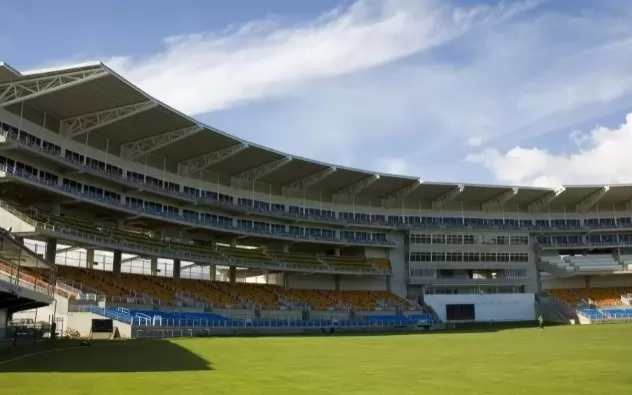
Stadiums have always been cultural icons symbols of community, innovation, and national pride. Yet today’s most advanced arenas are evolving beyond their monumental image. They are becoming adaptive architectural organisms, designed to respond to shifting environments, diverse uses, and ever-growing sustainability demands.
At the center of this transformation lies the flexible roofing system a design solution that merges engineering precision with architectural creativity.
These systems redefine what a stadium roof can achieve: they open to the sky, protect against storms, enhance acoustics, and regulate thermal comfort, all while minimizing environmental impact.
As multi-purpose stadiums host an expanding variety of events from sports to concerts, exhibitions, and community gatherings flexibility is no longer a luxury. It is a necessity.
The success of flexible roofing systems lies in the synergy of advanced materials, lightweight modularity, and resilient structural design.
Unlike traditional static roofs, flexible systems must accommodate movement, dynamic loading, and diverse environmental conditions without losing integrity or performance.
At the core of Riverclack’s flexible roofing philosophy is its exclusive aluminum technology.
While many competitors rely on steel panels up to 0.9 mm thick, Riverclack® employs 0.7 mm aluminum alloy EN AW 5754, a material that offers:
Despite its lightness, every Riverclack® roof is walkable and load-tested up to 400 kg/m² with elastic deformation, ensuring safe access for maintenance and inspection without compromising performance.
This unique combination of lightness, strength, and walkability sets Riverclack apart in the field of adaptable stadium roofing.
Modern stadiums must perform flawlessly under extreme weather, acoustic pressure, and energy efficiency standards. Riverclack’s flexible roofing solutions address each of these critical factors through integrated performance engineering.
Stadium roofs must manage vast surface areas where even minor imperfections can cause major issues.
Riverclack’s patented mechanical locking system ensures 100% watertightness without perforations, allowing rainwater to flow naturally through concealed drainage paths. This guarantees long-term reliability even under heavy rainfall or snow accumulation.
Sound defines the energy of a live event. A well-designed roof enhances that atmosphere while preventing excessive reverberation or noise pollution.
Riverclack® systems can integrate acoustic insulation layers beneath the panels, balancing sound reflection and absorption optimizing both spectator experience and neighborhood comfort.
Flexible roofing systems must ensure stable internal temperatures despite varying outdoor conditions.
Riverclack® panels work in tandem with high-performance insulation and natural ventilation systems to minimize heat transfer, optimizing comfort while reducing energy consumption for HVAC systems.
The result is a roof that breathes with the building regulating, protecting, and performing intelligently.
One of the most strategic benefits of a modular roofing system lies in its adaptability over time.Unlike monolithic or fixed structures, modular roofs can evolve with the building, allowing for partial replacements, technological upgrades, or expansions with minimal disruption.
For stadiums designed to operate year-round hosting sports, concerts, and large-scale public events this modular flexibility translates into economic resilience and architectural longevity.
Sustainability is no longer a side objective in architecture it is a guiding principle.
Flexible roofing systems like Riverclack’s align with the global movement toward eco-efficient building design, offering multiple sustainable advantages:
This holistic approach demonstrates how technical innovation and environmental responsibility can coexist and even reinforce one another.
In the world of stadium design, engineering excellence must coexist with visual identity. Each stadium is a landmark a signature structure that reflects the culture and character of its city.
Riverclack® empowers architects with unprecedented freedom of form, enabling:
Thanks to its mechanical seam-locking technology, Riverclack supports bold, fluid shapes from undulating rooflines to retractable or semi-flexible covers combining artistic ambition with engineering integrity.
This flexibility has already been leveraged in global landmark projects ranging from airport terminals to sports arenas, where the balance between design and performance defines the success of the structure.
As multi-purpose stadiums continue to evolve, the demand for adaptable, efficient, and sustainable roofing systems will only intensify.
The future points toward structures that are not merely roofs, but responsive systems capable of transforming with the rhythm of human activity, weather, and technological change.
Riverclack® stands at the forefront of this transformation. Its unique combination of modularity, walkability, and material innovation sets a new standard in flexible roofing for stadiums, meeting the highest expectations for performance, safety, and environmental stewardship.
From acoustics to drainage, from modularity to sustainability, Riverclack offers a single integrated solution that redefines the boundaries of stadium architecture where adaptability meets excellence, and engineering meets art.
Versatile, Easy-to-Install, Long-Lasting, Sustainable
 About Us
  Why Riverclack®
  Systems
  Technical Support
  Projects
  Designed for
  Contacts
  Join Us